Showing posts with label termite service. Show all posts

Wednesday, November 6, 2013

Are you in need of a VA or NMPA-33 Inspection for your purchase or refinancing?


VA Wood Destroying Insect Inspection Report / Termite Inspection

A VA Wood Destroying Insect Inspection Report is usually required for VA loans and refinances. This form, commonly referred to as Form npma-33, is requested by the VA when processing a home loan or refi.

What Does a VA Wood Destroying Insect Inspection Report Include?

A Wood Destroying Insect Inspection Report will include a visual inspection of the readily accessible areas of the structure. The inspection will include all wood destroying insects, including drywood and subterranean termites as well as any fungus or dryrot. There is a nominal fee for this report.

What Happens Next with Form NMPA-33?

A licensed termite inspector will complete the VA Wood Destroying Insect Inspection and go over the inspection with you. The inspector will let you know if there was any visible evidence of wood destroying insects OR if the report was clear of any findings.

Getting Your VA Wood Destroying Insect Inspection Report

Our state report is acceptable as the form NMPA-33. Your report will be typed up and is available to be mailed, faxed or e-mailed directly to you or your loan processor. You can then forward a copy of the report to the appropriate parties.

Why Choose AmeriGuard Pest Defense For Your VA Loan or Refi?

AmeriGuard is a veteran-owned business. Read more on our About Us page. We look forward to working with you and the VA to help you with your home loan or refi. Call us at (951) 652-0505 to schedule a convenient time to perform a wood destroying insect inspection. We look forward to speaking with you and answering any questions you may have and thanking you for your military service.

Friday, March 8, 2013

Drywood Termite Control & Wood Repair Service

Drywood termites feed on dry wood. A drywood colony attacks structural timbers and woodwork of buildings often found in attic framing, wood beams, rafters, siding, fascia, eaves, trims and any other dry wood material in a home.  

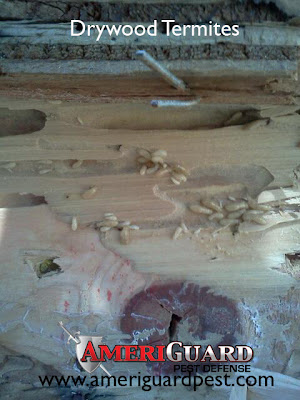
This termite inspection revealed drywood termites infesting the wood trim of a manufactured home and the siding of the detached shed. 

Termite pellets behind the trim wood piece that is attached to the wood siding.

drywood-termite-pellets

drywood-termite-droppings
Close-up of drywood termite droppings visualized
within the wood trim piece
The termite control work was scheduled and performed in a timely fashion. 

First, the damaged trim was removed from the infested structure during this termite treatment. Second, the wall void was treated with a termiticide by drilling through the exterior siding. 

drywood-termite-treatment-wood-repair


drywood-termite-service
Close-up of the removed wood trim during the
termite treatment service.

Live drywood termite workers were found during the termite treatment.

drywood-termite-workers
Drywood termite workers.

drywood-termite-control

Lastly, the trim was replaced with new wood and painted to match.  
drywood-termite-treatment-wood-repair
Termite wood repair job completed.
A thorough termite inspection is extremely important when inspecting for termite damage.  An experienced termite inspector will pay close attention to all of the structural wood and woodwork both on the exterior and the interior of a structure.

A termite control service will treat all of the active infestations found at the time of the termite inspection. AmeriGuard Pest Defense provides guarantees for all termite control work. If you are a homeowner or business and have found damaged wood, drywood termite pellets or droppings or kickout holes, you should contact your termite control professionals at AmeriGuard Pest Defense for a termite inspection by calling (951) 652-0505.

Friday, January 25, 2013

Drywood Termites - Evidence, Biology, Habit, Treatment

According to the National Pest Management Association, termites cause an estimated 5 BILLION dollars in damage each year.

Most homes are constructed from wood materials and the diet of a drywood termite is just that...WOOD! It's a match made in heaven for the termite, but a horrible headache and expense for a homeowner that has discovered evidence of drywood termites. Fortunately, a licensed and experienced termite inspector AmeriGuard Pest Defense can help navigate the entire process from start to finish and take some of the stress away from you.

Drywood termites are different than their subterranean counterparts. Drywood termites do not need a moisture source or contact with soil to survive. Rather, drywood termites feed on dry wood that is above ground, namely the framing materials, eaves, rafters, roof tails, window sills and any other wood found in a structure. 

DRYWOOD TERMITE EVIDENCE

Evidence that drywood termites are feeding on the cellulose material in your home can come in some different forms.

  • Drywood termite swarmer
  • Drywood termite pellets
  • Drywood termite wings
  • Drywood termite kick holes
  • Drywood termite damaged wood

DRYWOOD TERMITE SWARMERS


After several years when a drywood termite colony matures, pairs of swarmers take flight to establish new colonies. Drywood termites swarm when there is a rise in temperature. Drywood termites are not great fliers and often travel short distances with the help of wind currents. 

DRYWOOD TERMITE WINGS


Once the swarmers settle, they shed their wings. Homeowners sometimes report finding wings on exterior window screens or interior window sills.

DRYWOOD TERMITE PELLETS & KICK HOLES


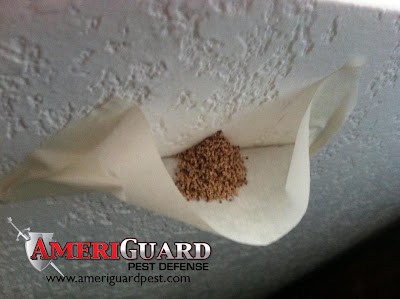
Drywood termites produce pellets, which is simply drywood termite fecal matter. The pellets are then expelled out of their galleries (hollowed out portions of chewed wood) through kick holes. These pellets collect in piles or scattered about if the distance below is great.
Drywood termite pellets
Drywood termite pellets have fallen to the bottom of a subarea floor
from the floor above in this home with a raised foundation.


Drywood termite kickout holes
Drywood termite pellets are expelled from kickout
holes. 

Drywood termites chewing wood
Drywood termites chew wood creating
hollowed out galleries.


Drywood termite pellets
New drywood termite pellet evidence
is being collected directly from the kickout holes


DRYWOOD TERMITE WOOD DAMAGE

Drywood termites chew wood and create hollowed out galleries, which threaten the integrity and support of the wood. 


Drywood termite wood damage
Drywood termites cause damage by eating wood,
which threatens the structural integrity of buildings. 
Most homeowners do not realize that they have a drywood termite problem until they see the warnings signs mentioned above. Evidence of swarmers, missing wings, kick holes, piles of pellets and hollowed out wood members are all quite obvious signs of termites. Unfortunately, these signs are not usually visible until a termite colony has been well established for quite some time, usually a number of years. 

AmeriGuard Pest Defense is experienced and licensed to perform several different termite treatments depending on the findings of each individual home that is inspected for wood destroying organisms. If you see termite evidence or suspect a termite infestation, do not hesitate to call your termite professionals for an inspection. We offer free limited inspections to residential homeowners. Full inspections are recommended and available for a nominal fee. Once the inspection is completed, you will receive a Wood Destroying Organism (WDO) Report with all of the Section I and Section II item findings as well as recommendations that fit your unique situation. Local treatment options may be available to you instead of a fumigation. 

For more information and additional pictures of fumigations and termite treatments, please visit us on Facebook.


Monday, January 21, 2013

Subterranean Termite Inspection & Evidence

Suberranean Termite Inspection & Control

Southwest Riverside County

There are a couple of different reasons why AmeriGuard Pest Defense is called out for a termite inspection.

  1. Termite Evidence
  2. Escrow Inspection required by the bank when selling or refinancing real property

In some cases, a homeowner finds evidence of subterranean termites. Subterranean termites live underground in the soil or in moist secluded areas aboveground. Subterranean termites construct enclosed tunnels or mud tubes that allow them to travel and find food sources without being exposed to air. 

These subterranean termites were using books on a bookshelf as a food source. Since books are made out of paper, they fit right into the subterranean termite's diet of cellulose material. The homeowners had no idea that mud tubes existed behind their collection of old library books. Once they moved the books and found the termite evidence, they called AmeriGuard Pest Defense for a termite inspection.

Subterranean Termite Evidence


Subterranean Termite Mud Tubes
Subterranean Termites build mud tunnels called mud tubes.

Subterranean Termite Mud Tubes

Subterranean termite mud tubes at expansion joint
Mud tubes at a garage expansion joint.

Subterranean termites can lurk in inconspicuous places where you least expect to find them, but as you can see above, this species of termites need moist soil to survive and are usually found in damp conditions near cellulose material, such as the wood members of a structure. 


Based on your unique subterranean termite situation, AmeriGuard will recommend a solution based on the termite findings in your structure. A WDO Report will be issued and the work performed promptly and by a licensed pest control applicator. Once the work is completed, a completion report will be generated. All termite work comes with a guarantee.


Contact AmeriGuard Pest Defense at (951) 652-0505 to set up a convenient WDO Inspection. Our licensed termite inspector will go over all of the findings with you as well as thoroughly explain any primary and/or secondary recommendations available for your termite situation.